Designing a Learning Community for Early Career Developers
Project Summary
Designed a mentor-driven learning community that supported early-career developers who were not yet ready for job placement. The system combined mentorship, curated learning resources, and community events to help candidates stay engaged, build skills, and continue progressing toward technical roles.
Company: Onramp
Role: Lead UX Designer
Focus areas: Community Engagement, User retention, Learning Platform
Context
While many candidates joined Onramp with strong potential, not all were immediately ready for placement in technical roles. Without continued support, these candidates often disengaged from the platform before reaching their full potential.
The team saw an opportunity to create a structured learning community that could help candidates continue developing their skills while staying connected to the platform.
🔎 The Problem
Candidates who were not ready for job placement frequently faced the following problems:
Lack of structured guidance or learning resources
No access to experienced mentors
Limited peer support or community
Low rates of engagement with existing platform
Without these supports, promising candidates could lose momentum or abandon their learning goals entirely.
💻 My Role
I led the design of the learning community experience, exploring ways to support candidates through mentorship, structured resources, and community engagement.
My work included:
defining the mentor program structure
designing the community engagement system
creating automated communication workflows
organizing learning resources
designing an events hub for recorded talks and workshops
I also designed and launched an automated Discord community for an engaged group of learners that included weekly automated technical programs, hosted mentor sessions, and group collaboration.
🤝 Key Insights
Through with Customer Success insights I was able to identify the following insights from our users:
Motivation Comes From Community
Candidates were more likely to stay engaged when they felt connected to other developers facing similar challenges.
Clear Learning Paths Reduce Overwhelm
Many candidates struggled to decide what to learn next without structured guidance.
Mentorship Builds Confidence
Access to experienced developers helped candidates gain clarity and encouragement during their learning process.
Community Ecosystem Diagram
Candidate joins program
↓
Mentor groups
↓
Weekly engagement
↓
Event based learning resources
↓
Skill growth
Mentor Matching
Experienced developers volunteered through an intake system that matched them with relevant learners.
Mentors were grouped based on their background and ideal type of participation:
technical talks
mock interview
direct mentorship
Why it mattered:
good matching ensured volunteers and learners got the most out of their shared experience
positive, fulfilling engagement with industry leaders created network connections for the company
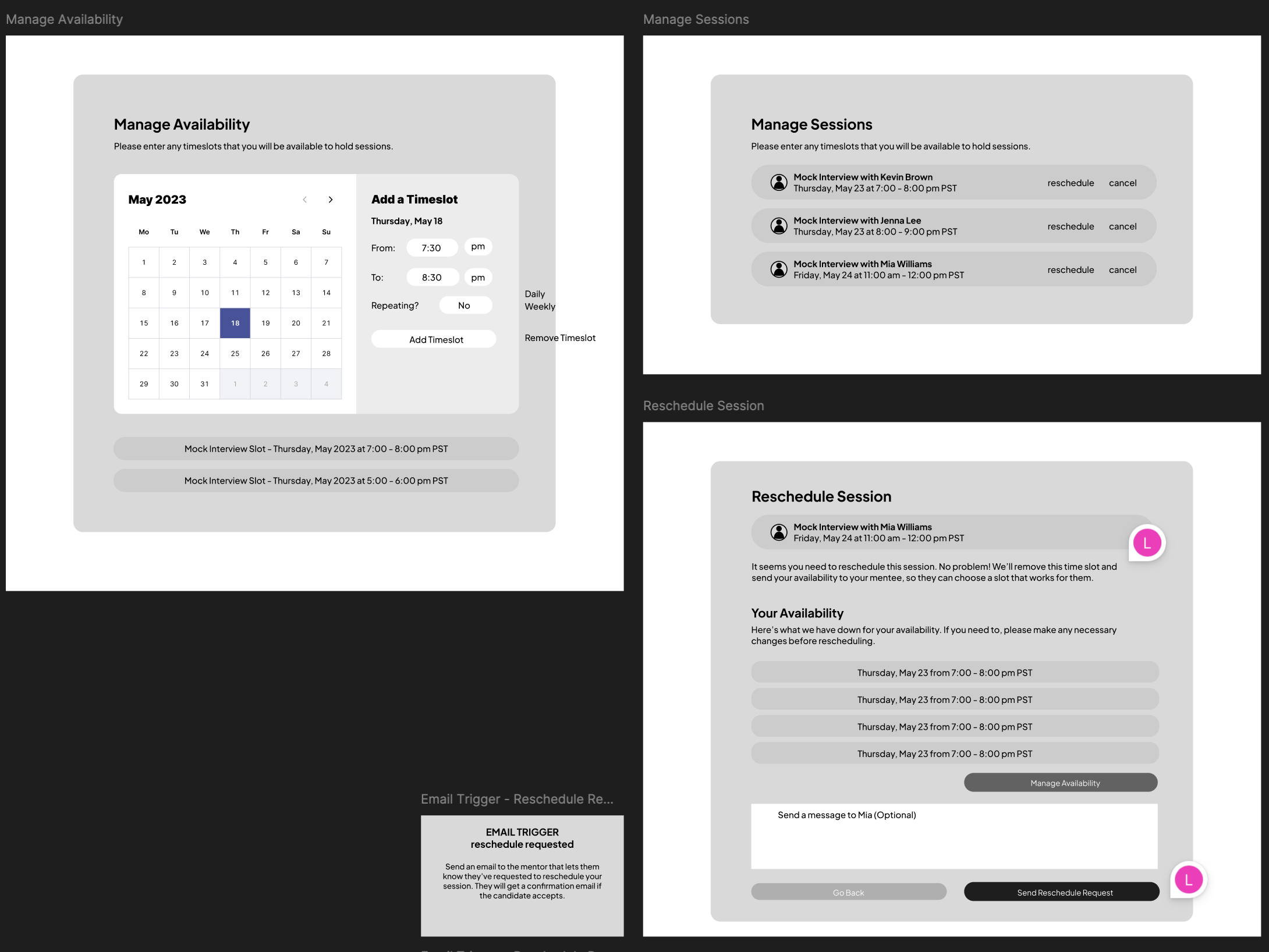
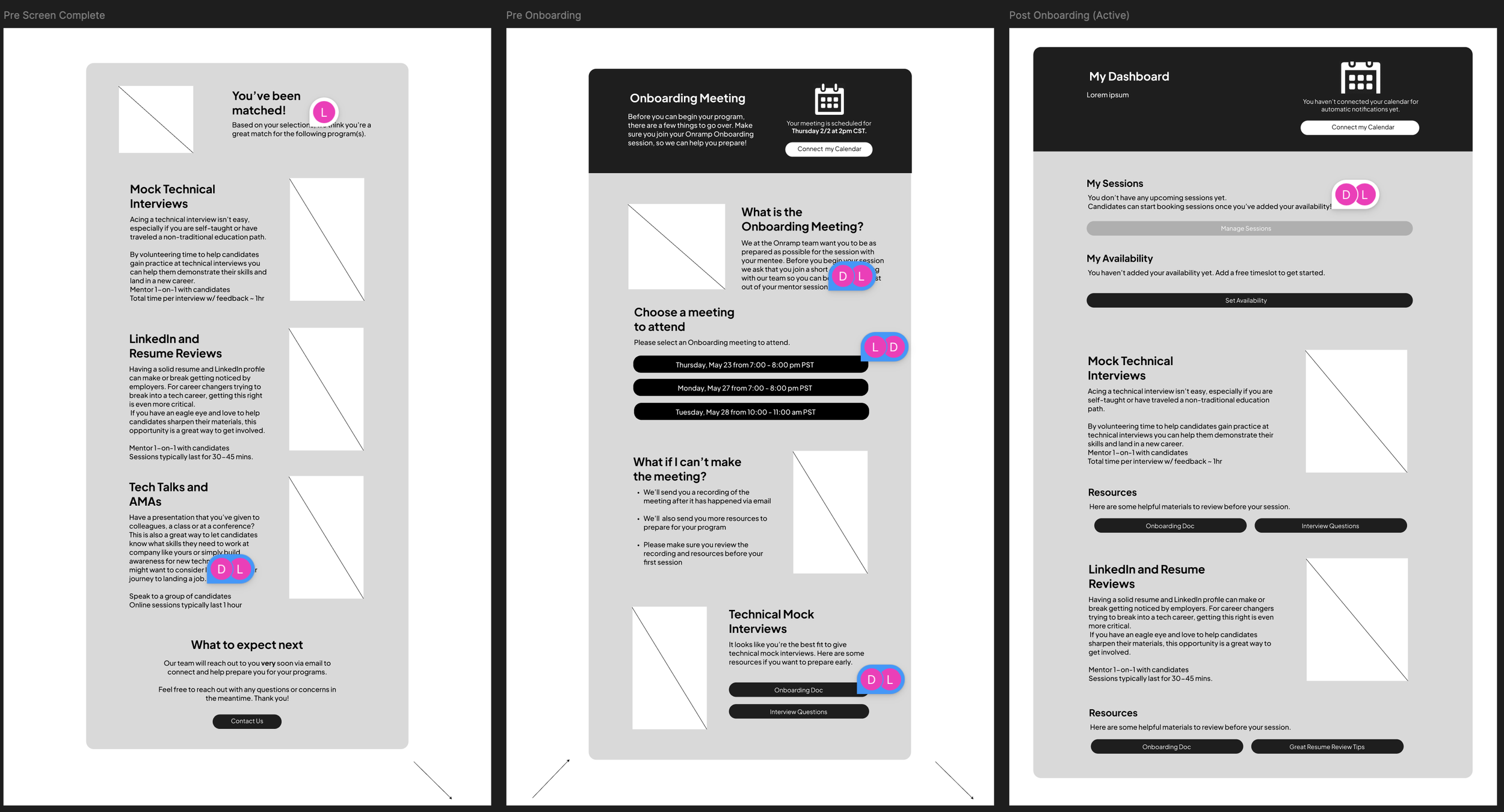
These low-fidelity wireframes outline the mentor experience flow.
This helped to define the following features:
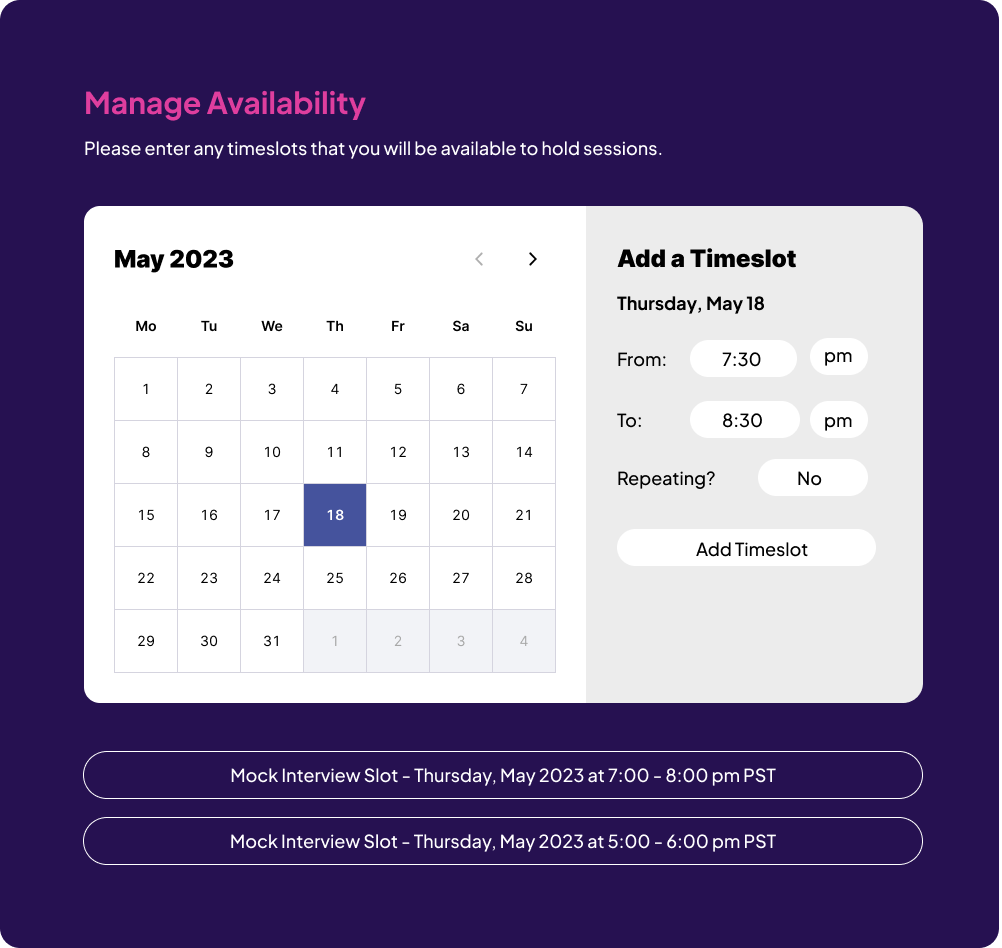
mentor availability, matching, and scheduling
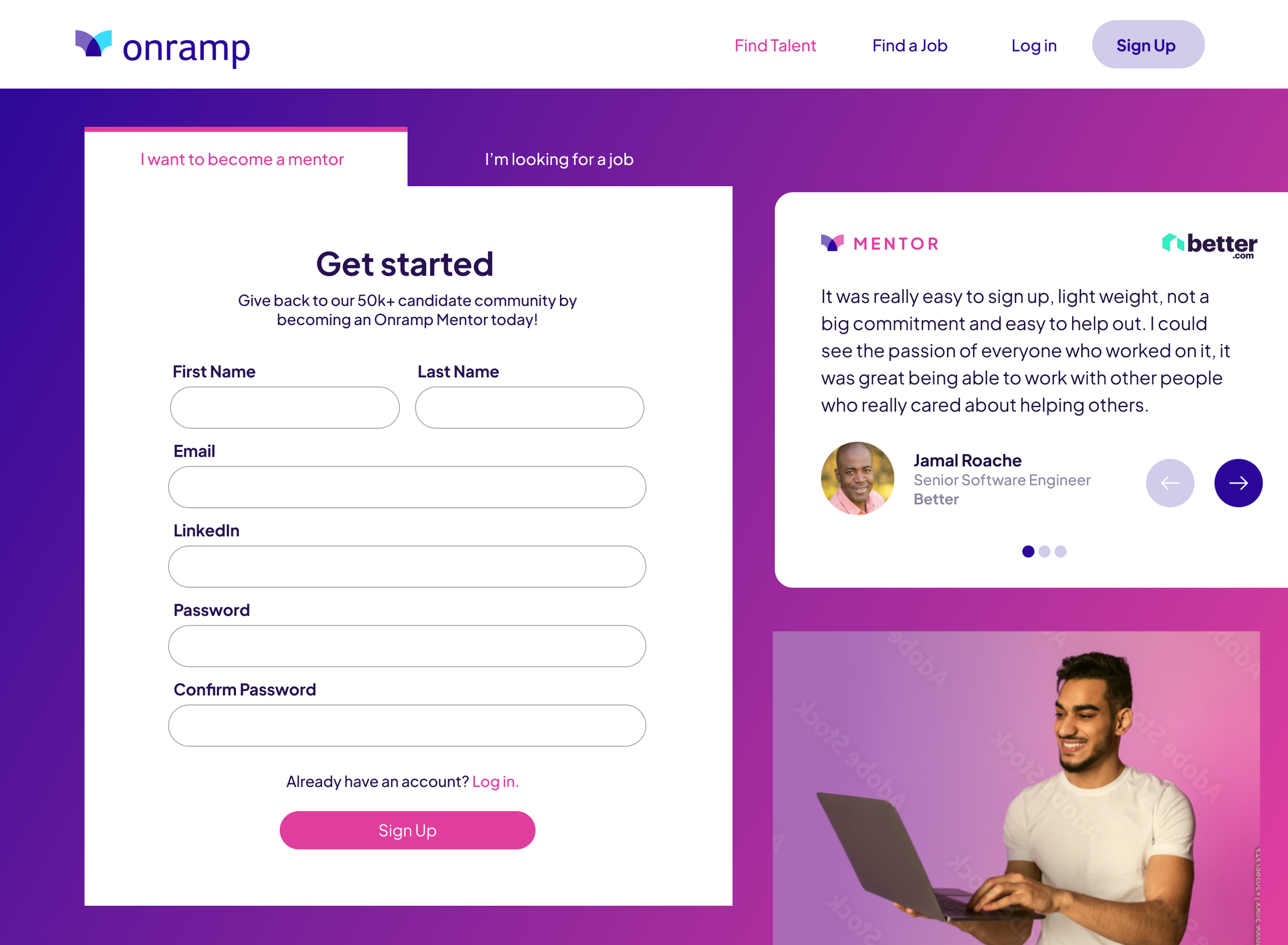
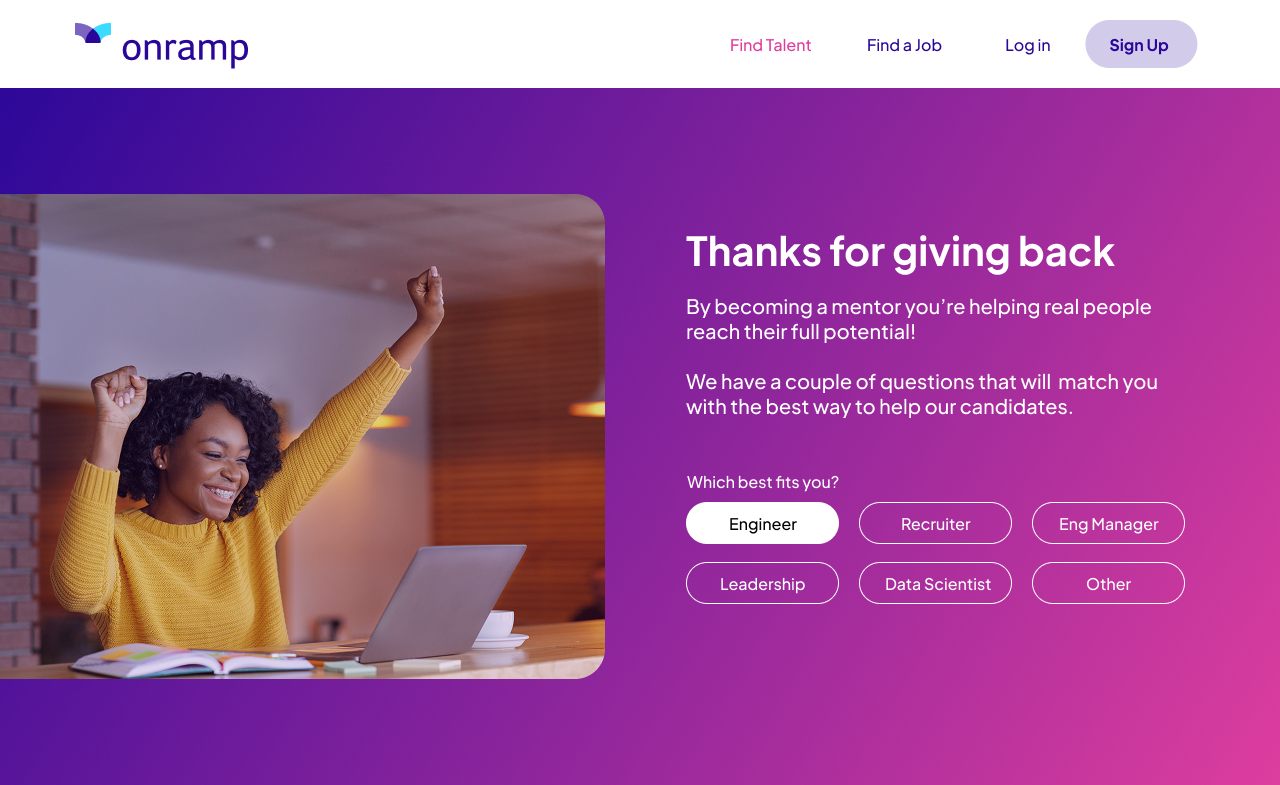
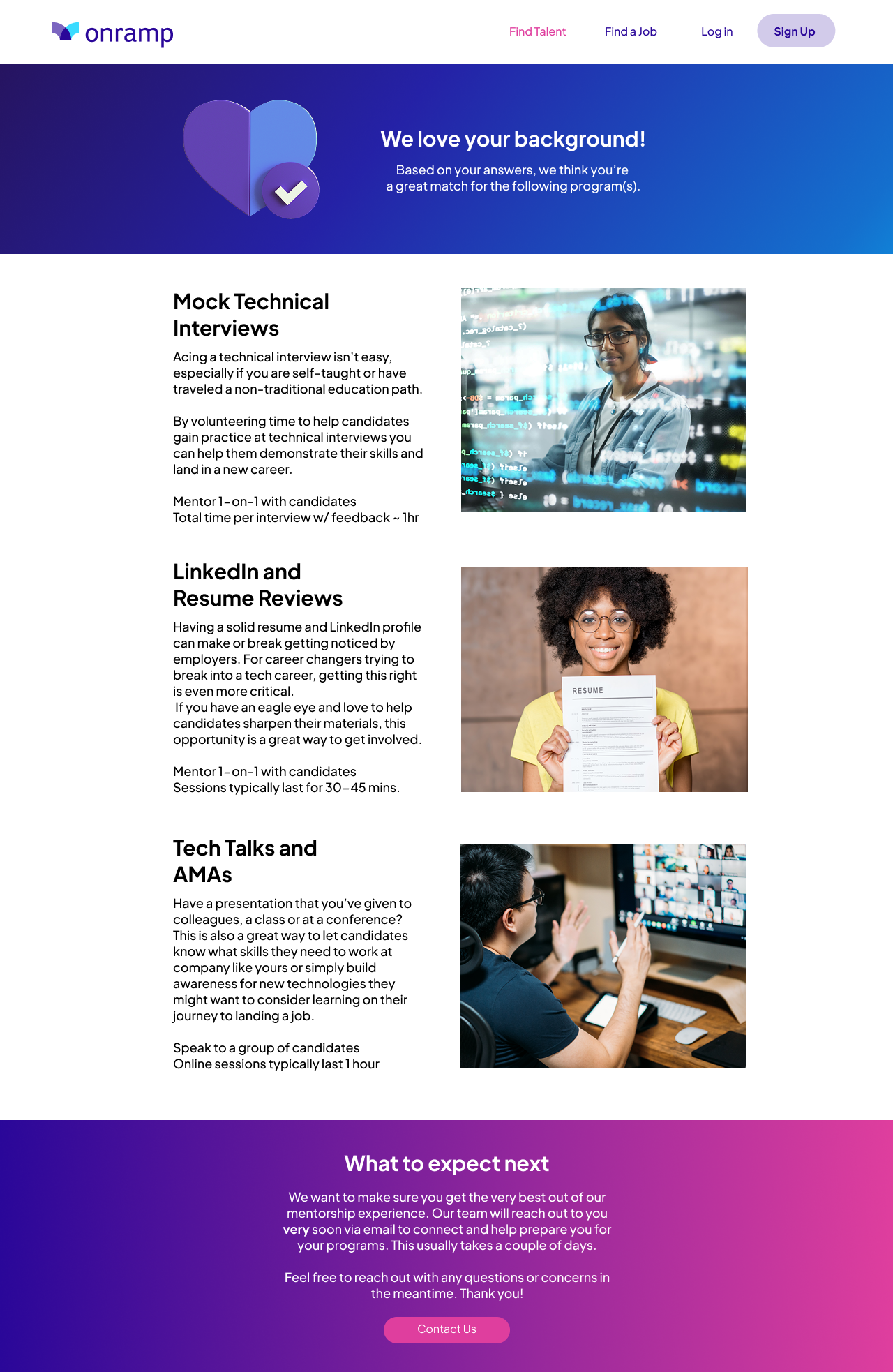
Below, high-fidelity designs illustrate the final user interfaces, focused on:
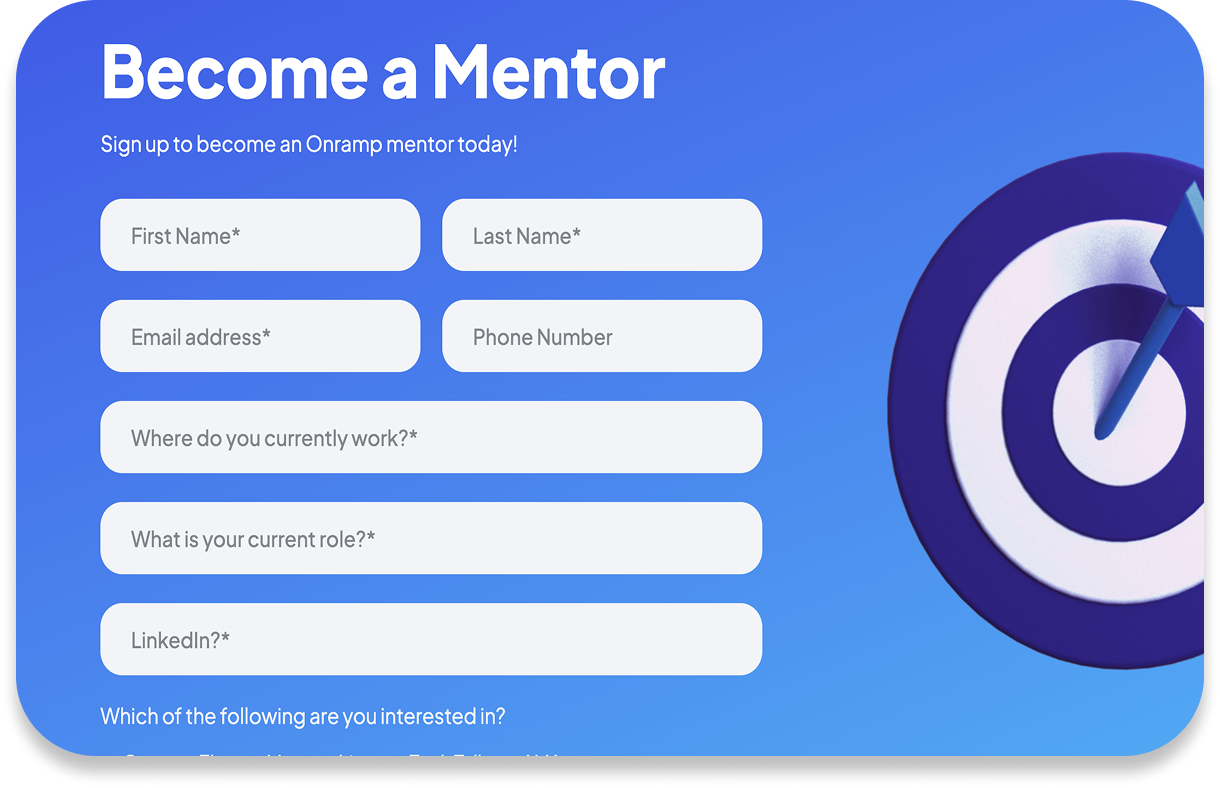
gathering data for quality matching
encouraging language and punchy, engaging design
clear availability and scheduling input

Community Hub
A shared community space (Discord) allowed candidates to:
stay accountable to each other,
ask each other questions
share and discuss resources
support each other
discuss technical topics
Why it mattered:
Peer interaction helped sustain motivation and create a sense of belonging
Community Hub Experience Diagram
Candidate joins program
↓
Placed in mentor group
↓
Added to community hub
↓
Automated weekly engagement
with learning resources
↓
Skill growth and continued platform engagement
Automated Weekly Content and Engagement
I created weekly content using Zapier’s Google Sheets & Discord Integrations for automated messages sharing:
the topic of the week
2-3 learning resources (free articles and videos)
2-3 discussion questions
1-2 related LeetCode questions to solve, share solutions for, and discuss
1 hour calls with a mentor & scheduled call reminders
Why it mattered:
mentor calls created a human connection that made the learning journey feel less isolating
consistent, structured communication helped maintain engagement without requiring constant manual interaction.

Events and Resource Library
For volunteers who wanted to host Tech Talks and AMAs, a dedicated page showcased:
recordings of mentor talks
guest talks from experienced developers
curated learning materials
Why it mattered:
users could continue to easily engage with the online platform by accessing valuable learning content in one place
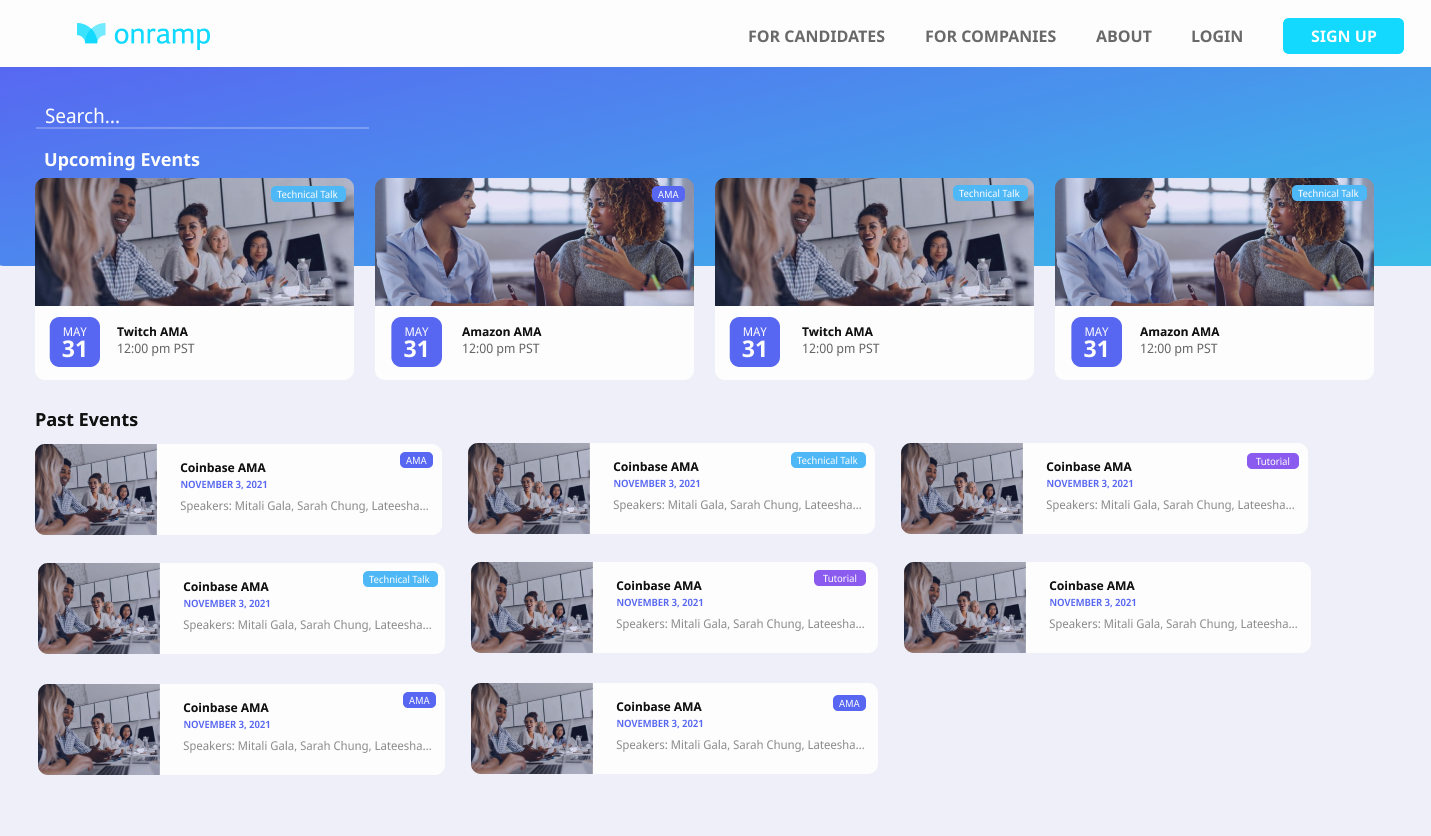
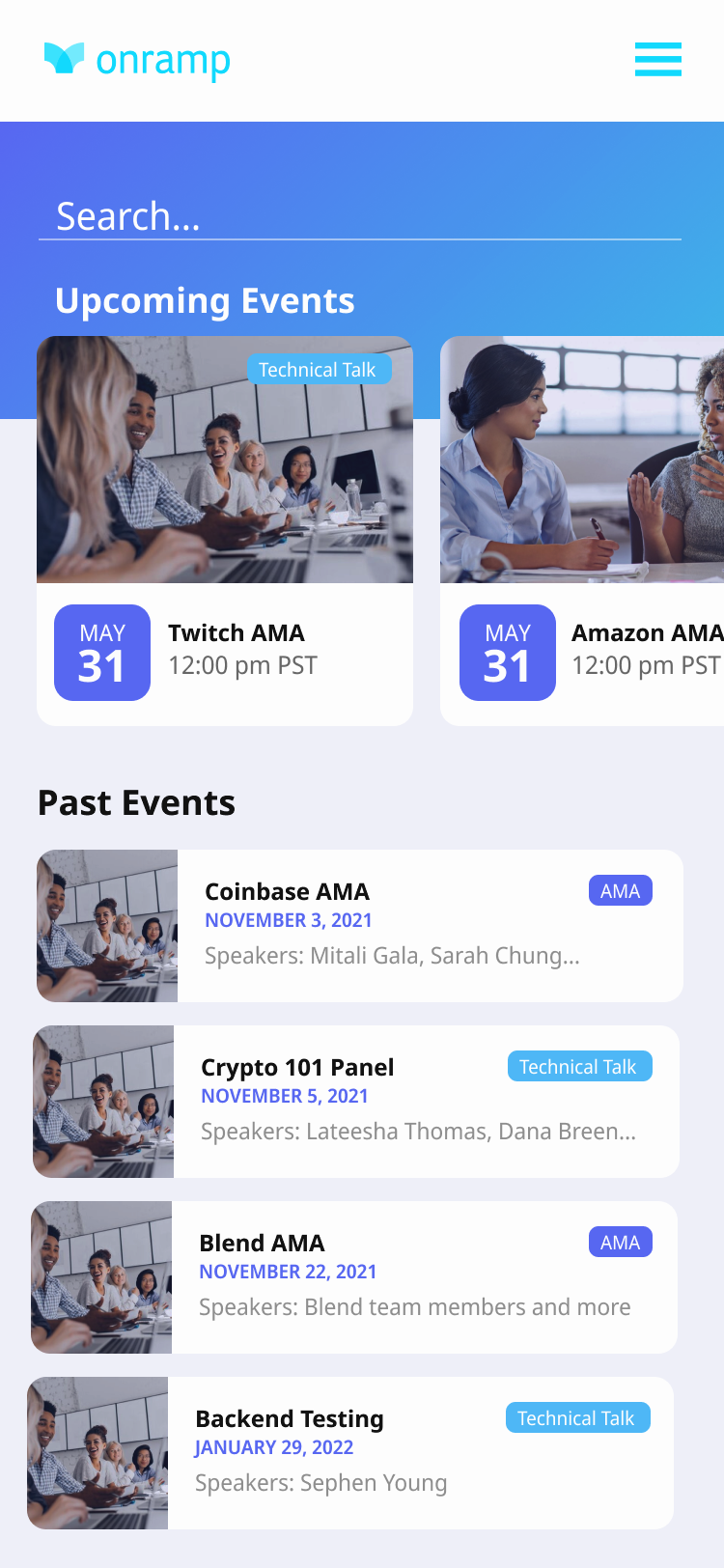
The Events Page final designs, which were linked from the Onramp homepage included:
recorded talks from mentors
category labels
curated learning resources.
✨ Program Outcomes
✔ The mentor program received overwhelmingly positive feedback from participants
✔ Candidates remained engaged with the platform while improving their skills
✔ Community discussions became a valuable support system for early-career developers
✔ Learning resources and recorded events provided ongoing value to members
Community members consistently reported that the mentorship and peer support helped them stay motivated in their learning journey
💡What I Learned
Designing communities requires thinking beyond individual features and instead focusing on how people interact, support one another, and stay motivated over time.
This project strengthened my ability to:
design community-centered experiences
support long-term user engagement
combine product design with ecosystem thinking