

Designing a Career Portal that Surfaces Overlooked Technical Talent
Project Summary
Designed a first-party career portal that enables non-traditional technical candidates to discover roles, apply flexibly, and track progress — reducing friction caused by traditional ATS.
Company: Onramp
Role: Lead UX Designer
Duration: 1 Month
Impact After Launch:
• Platform usage grew from 300 → 50,000+ users
• Application clarity rated 4.9/5 by candidates
• Increased application completion and candidate diversity
Context
Onramp’s initial application process relied on third-party applicant tracking systems that are known for unintentionally filtering out non-traditional candidates.
These systems prioritize resume keywords and rigid application formats, limiting applicant diversity and increasing drop-off for time-constrained users.
🔎 The Problem
Third-party job platforms unintentionally filter out non-traditional candidates (self-taught developers, bootcamp grads, career switchers).
These systems prioritize employer keyword filtering over applicant experience, creating:
High application drop off
Resume based filtering bias
Friction for users with limited time
Intimidation around “not meeting 100% of requirements”
Onramp’s business model depended on discovering strong but overlooked talent.
The application system was working against that goal.
💻 My Role
I led the end-to-end UX strategy and design of a first-party career portal, including:
Stakeholder interviews with founders
Synthesis of customer success feedback
User journey mapping
Information architecture
Mobile + desktop flows
High-fidelity UI design
Structured data system for reusable profiles
Collaborated with: Founders, Customer Success, Engineering
🤝 Key Insights
Through stakeholder interviews and customer success insights, three behavioral patterns emerged:
High-skill, low-confidence applicants
who self-filtered out if they didn’t meet every listed requirement.Time-constrained career switchers
needing flexible, savable progress.Candidates filtered out by ATS systems
due to resume structure, not ability.
The core issue: applications are optimized for employer efficiency instead of applicant equity.
📝Process visuals
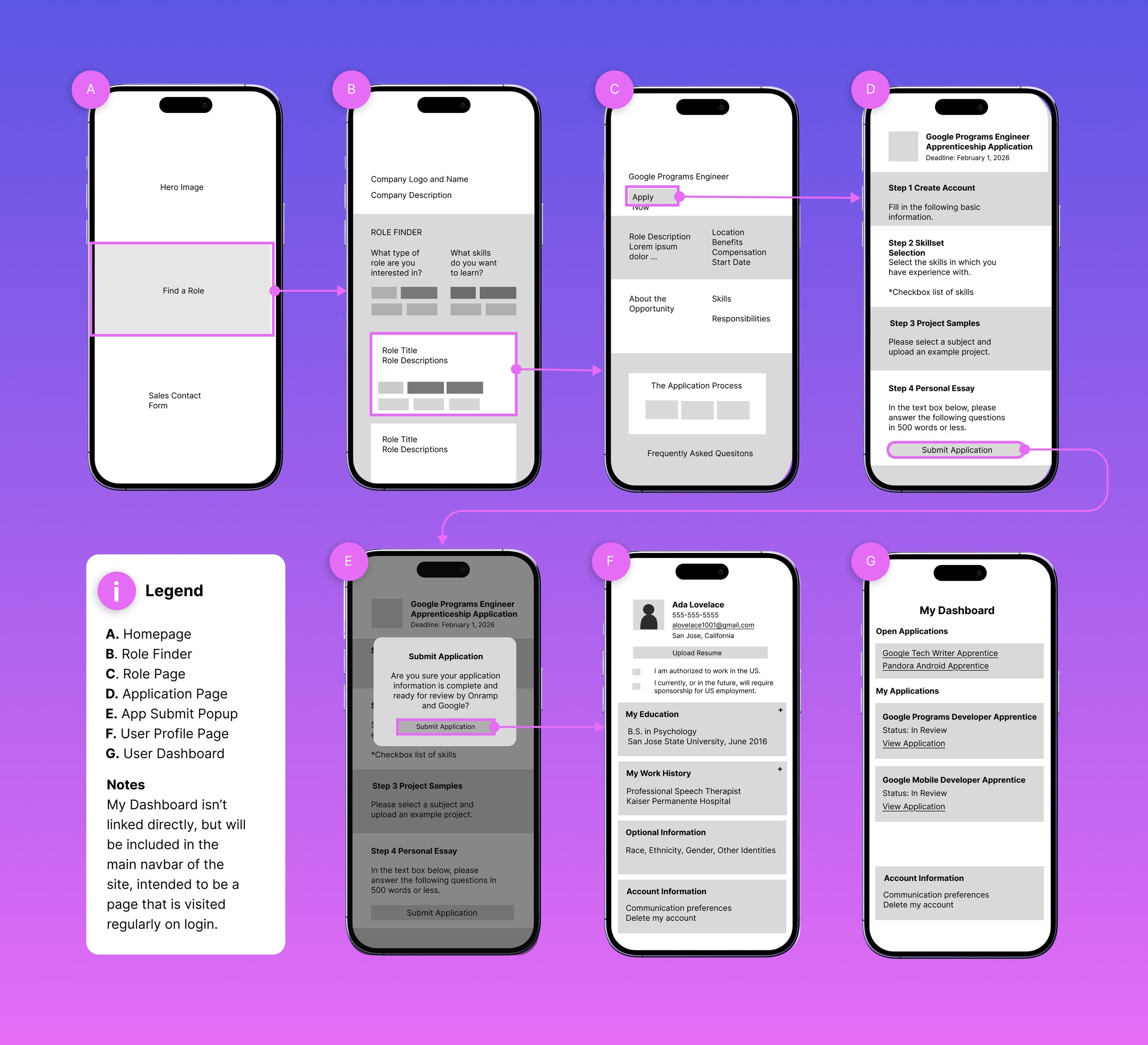
I translated insights into design solutions by creating a user flow diagram, exploration through sketching, and designing a cross-platform user flow.
These artifacts helped align stakeholders and guided high-fidelity design decisions.
User Flow Diagram
Browse Roles
↓
View Job Details
↓
Start Application
↓
Complete Modular Steps
↓
Save Progress
↓
Submit
↓
Track Status
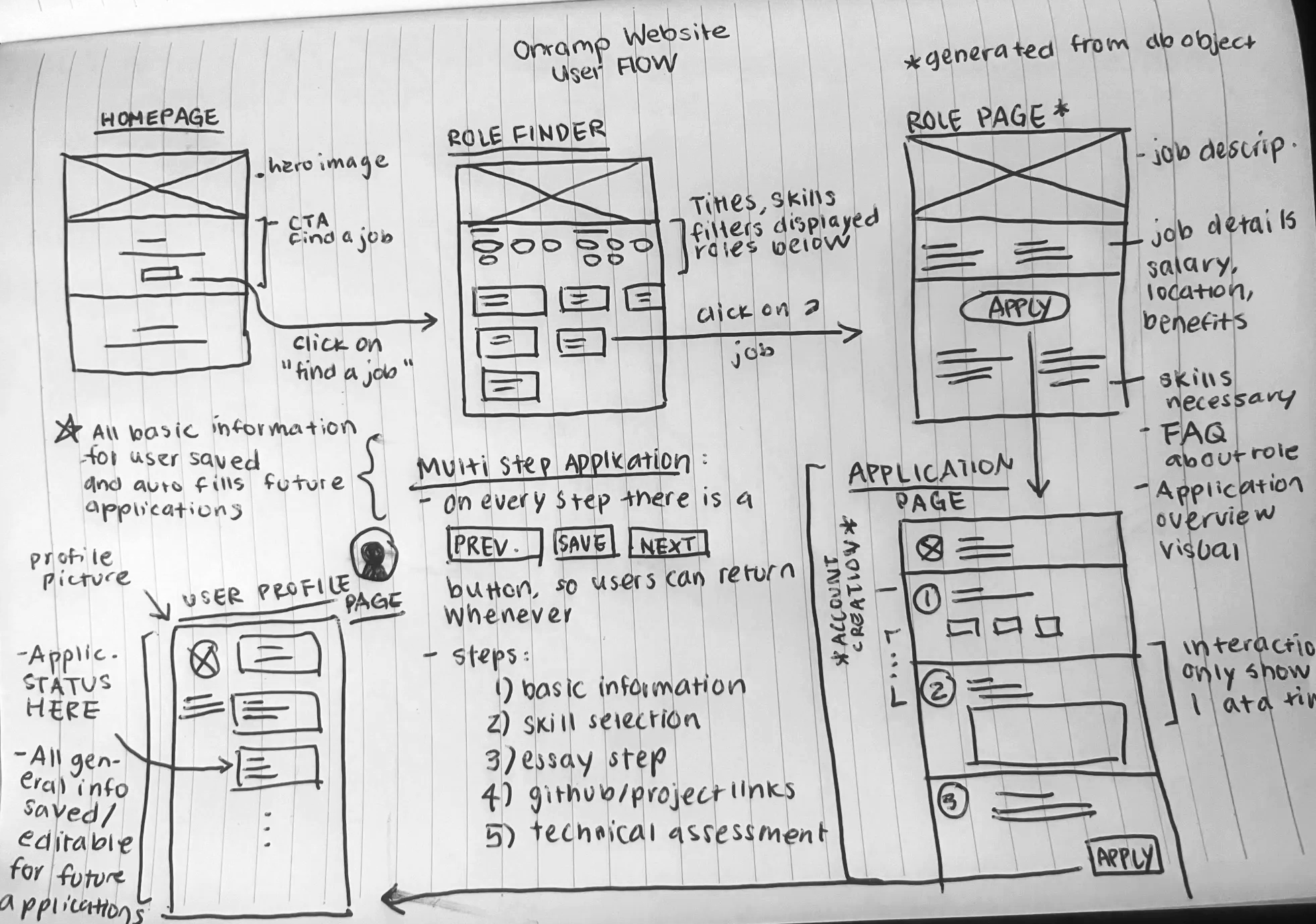
Early exploration of the candidate journey
A low-fidelity sketch of the user flow mapping role discovery, application, and profile to identify friction points and experiment with layout.
Cross platform interaction user flow
A low-fidelity wireframe and user flow highlighting key interfaces and interaction points. Helped facilitate stakeholder alignment and identify feature gaps through visualization.
🎯Strategic Decisions
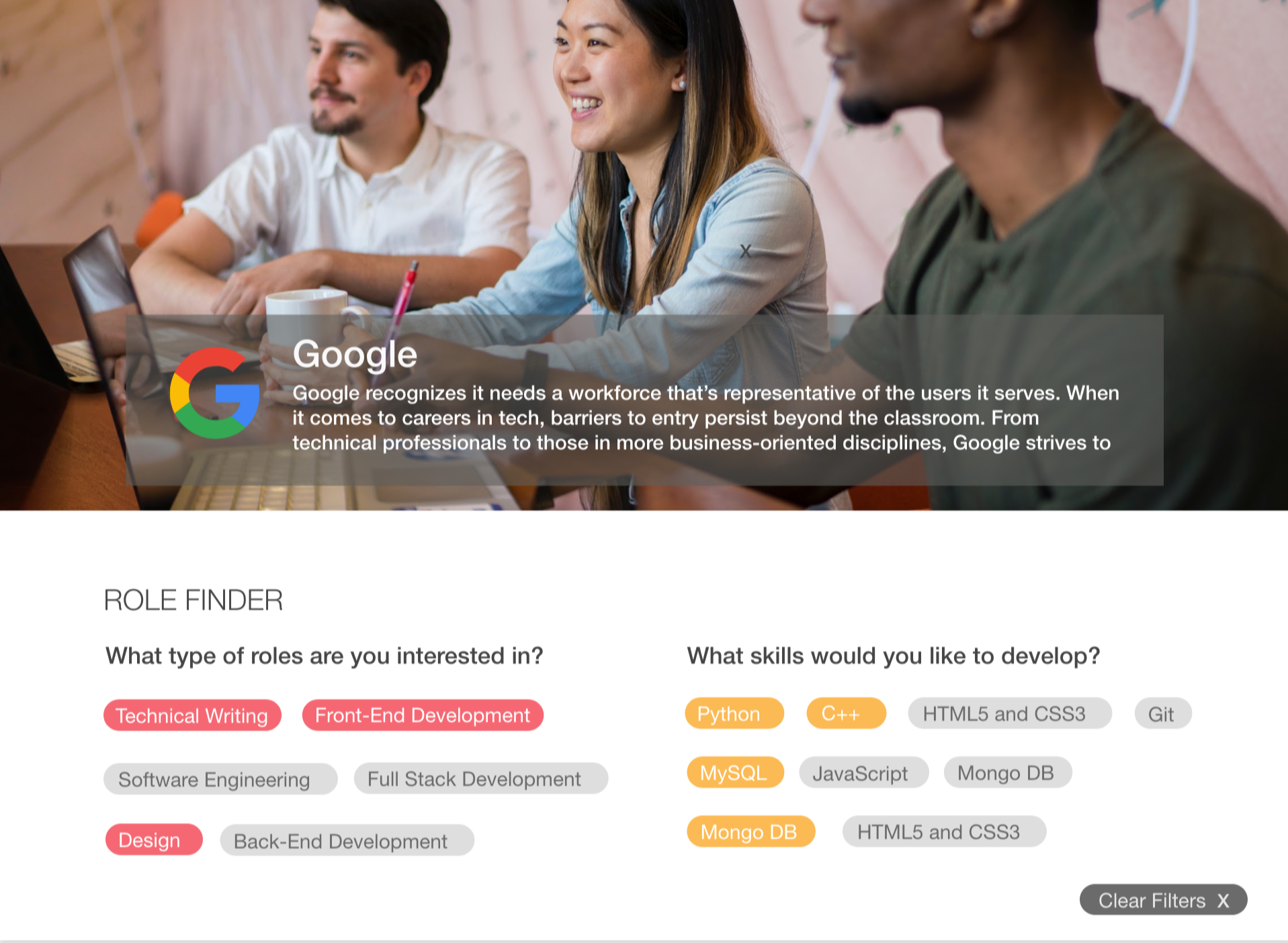
Shift from resume filtering to skill based discovery
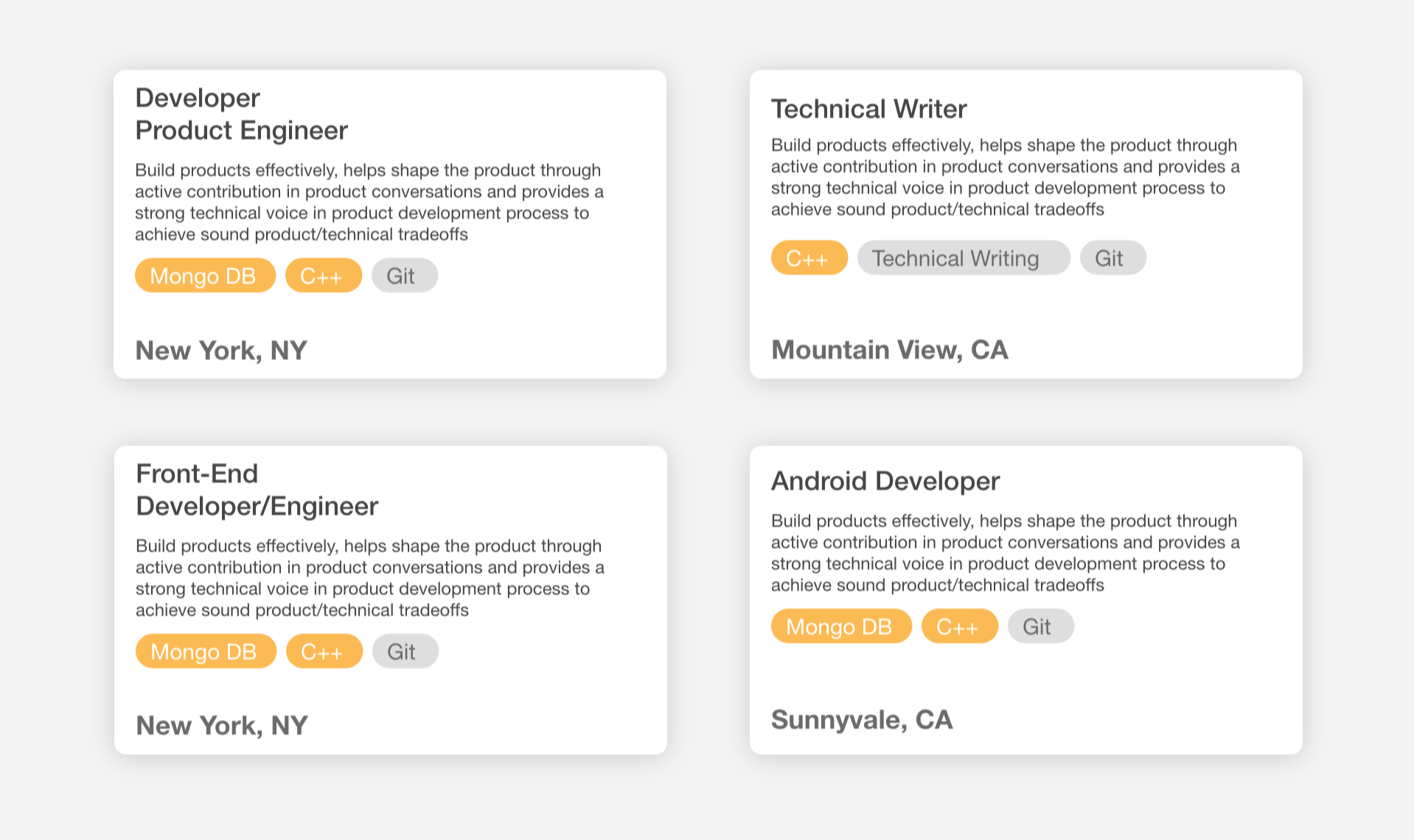
Instead of prioritizing job titles, I designed role discovery around skill clusters.
This allowed candidates to discover roles aligned with strengths even if titles didn’t match their background.
Why it mattered:
Reduced self-elimination and increased perceived relevance.
1
Break the application Into flexible, savable modules
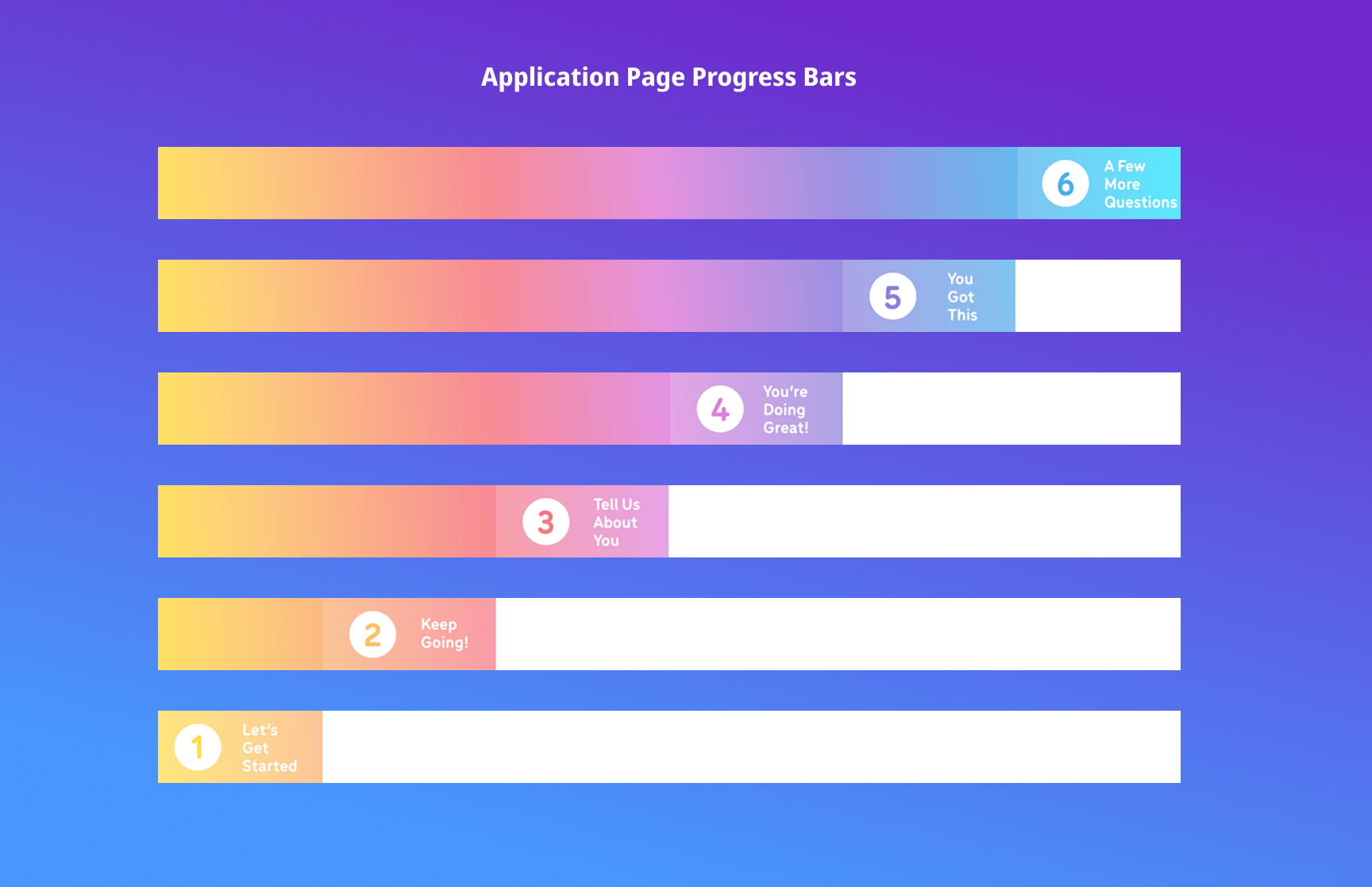
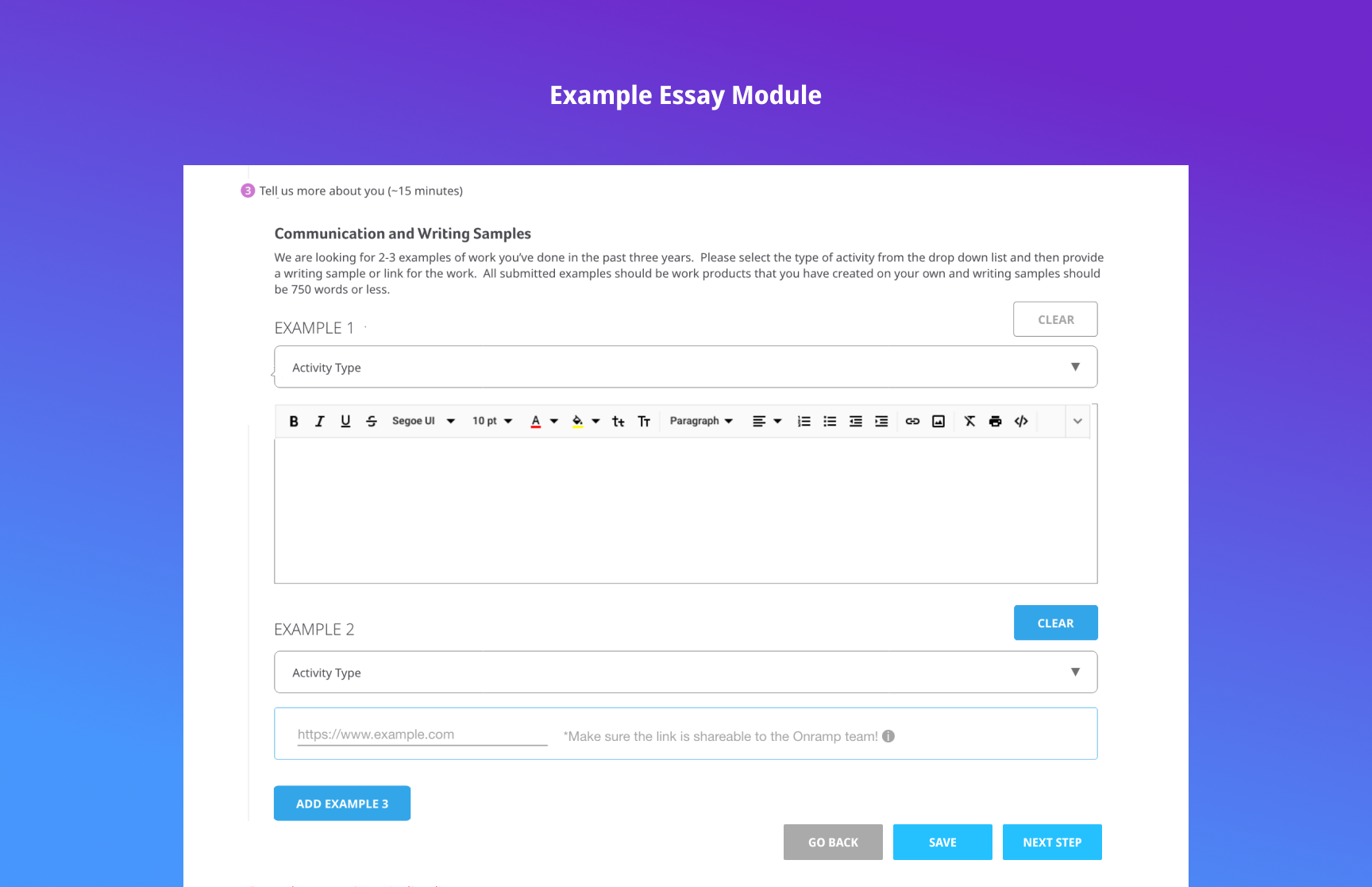
Applications were redesigned into independent, progress-savable sections:
Profile information, skillset selection, essay, technical assessment, and more
Progress bars and numbered steps gave users a sense of progression
Users could leave and return at any time.
Why it mattered:
Accommodated non-traditional users working multiple jobs or with caregiving responsibilities.
2
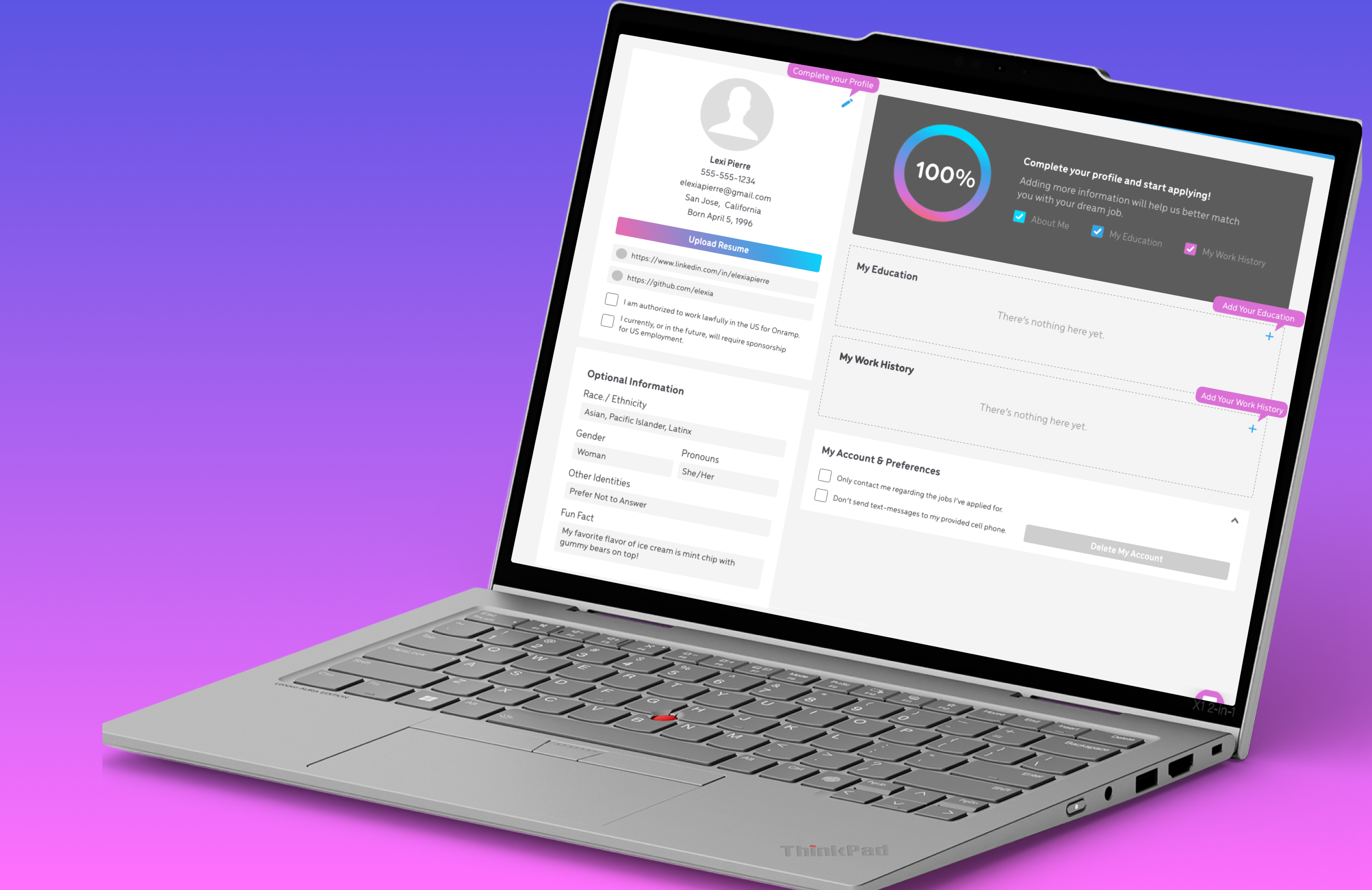
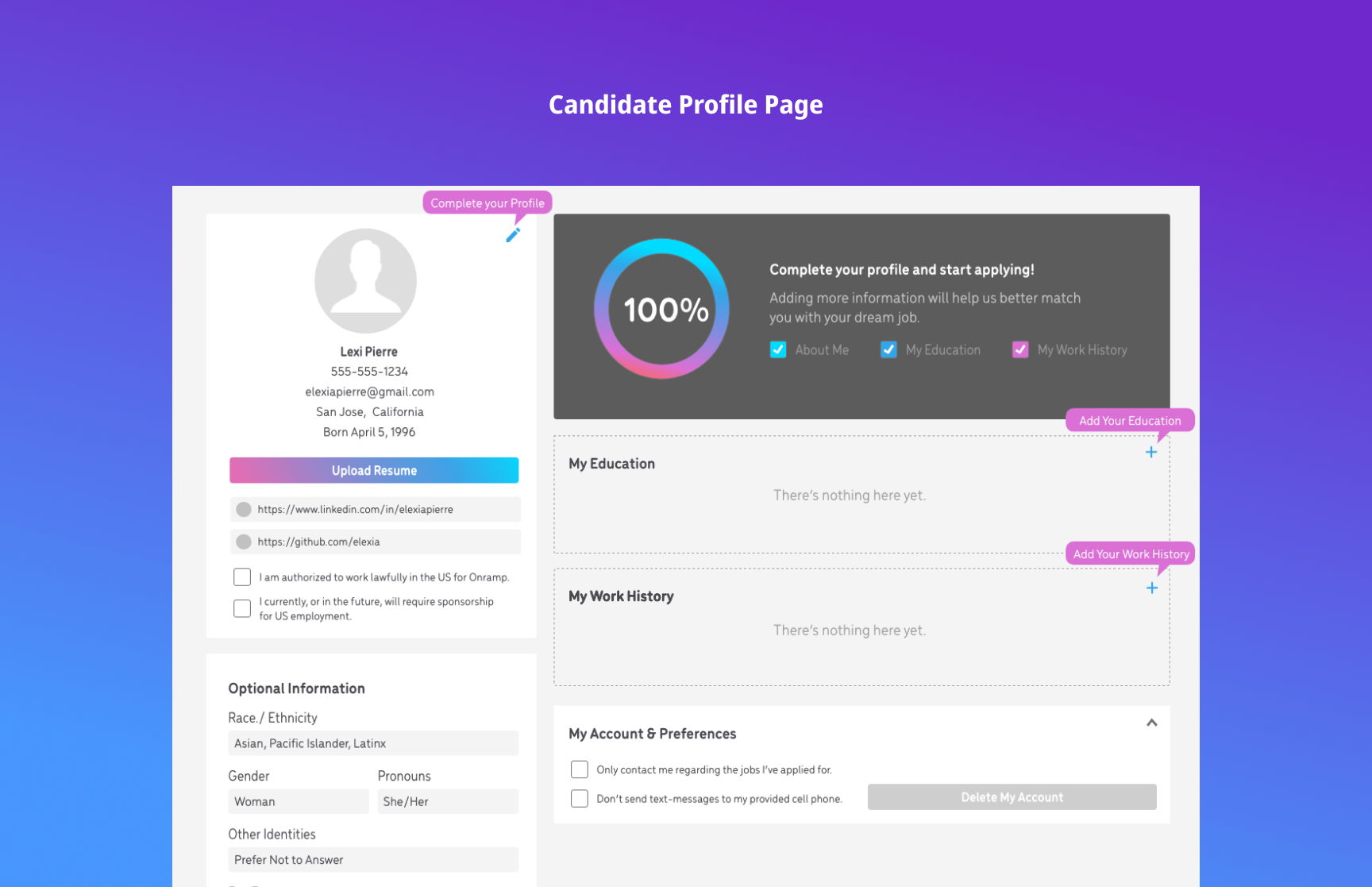
Create a structured, reusable candidate profile
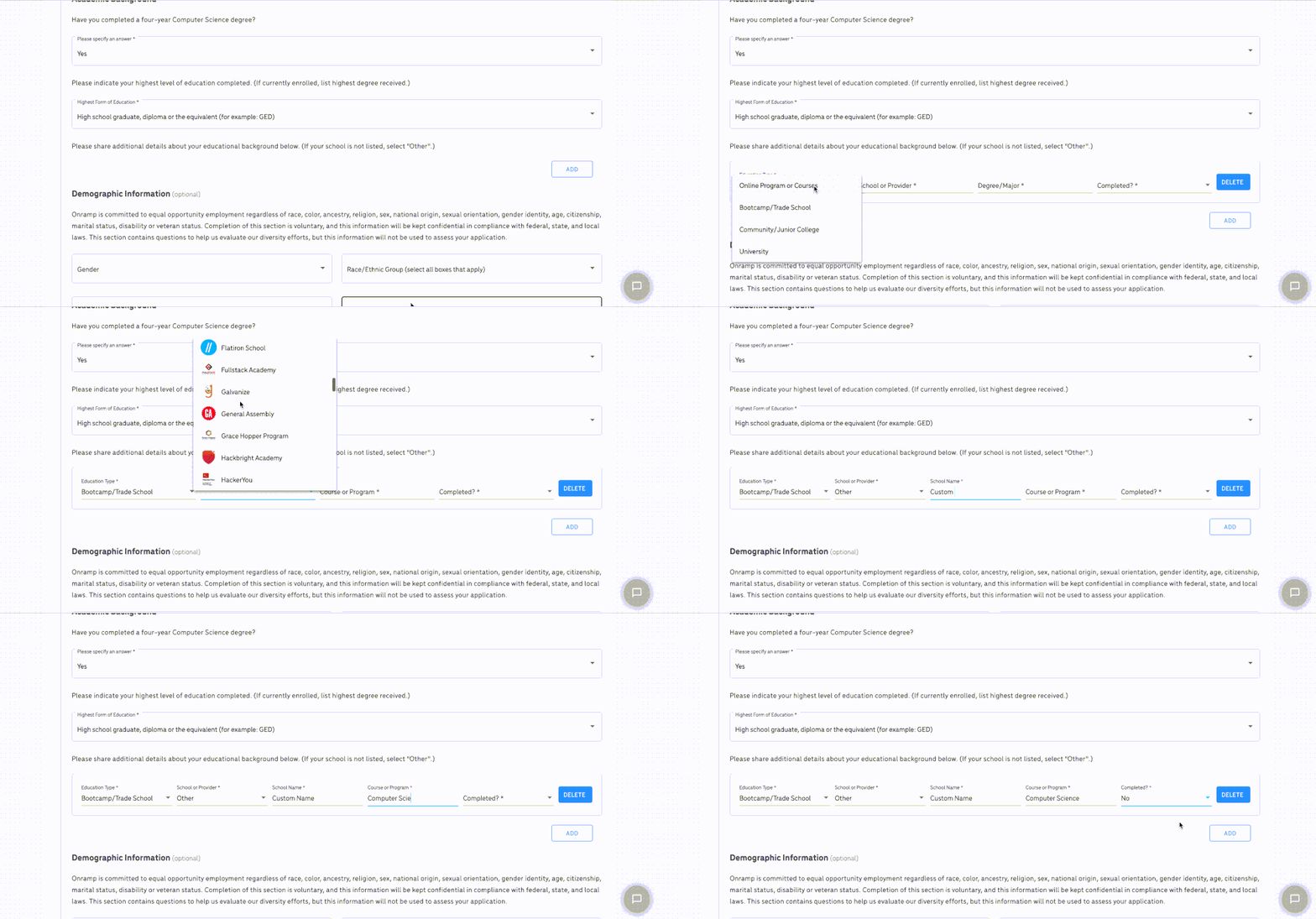
User data was structured and auto loaded into future applications.
From their profile page, users could update or change this information at any time.
Why it mattered:
Reduced repetition and cognitive load, increasing completion likelihood.
3
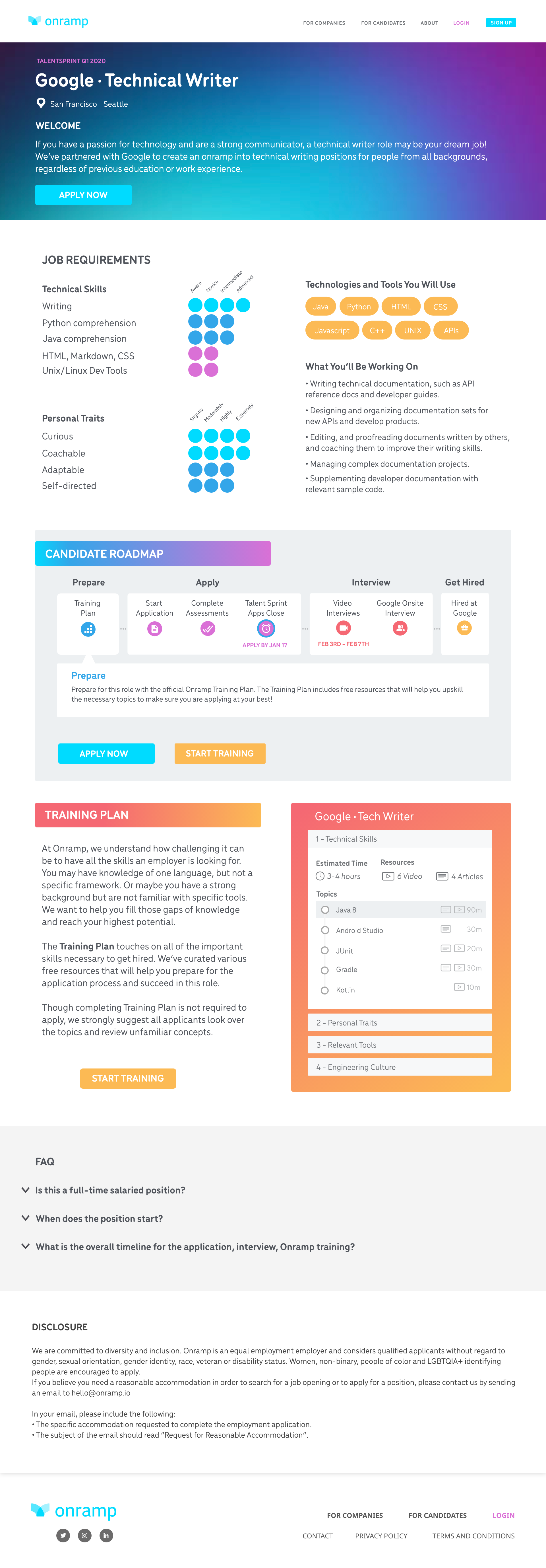
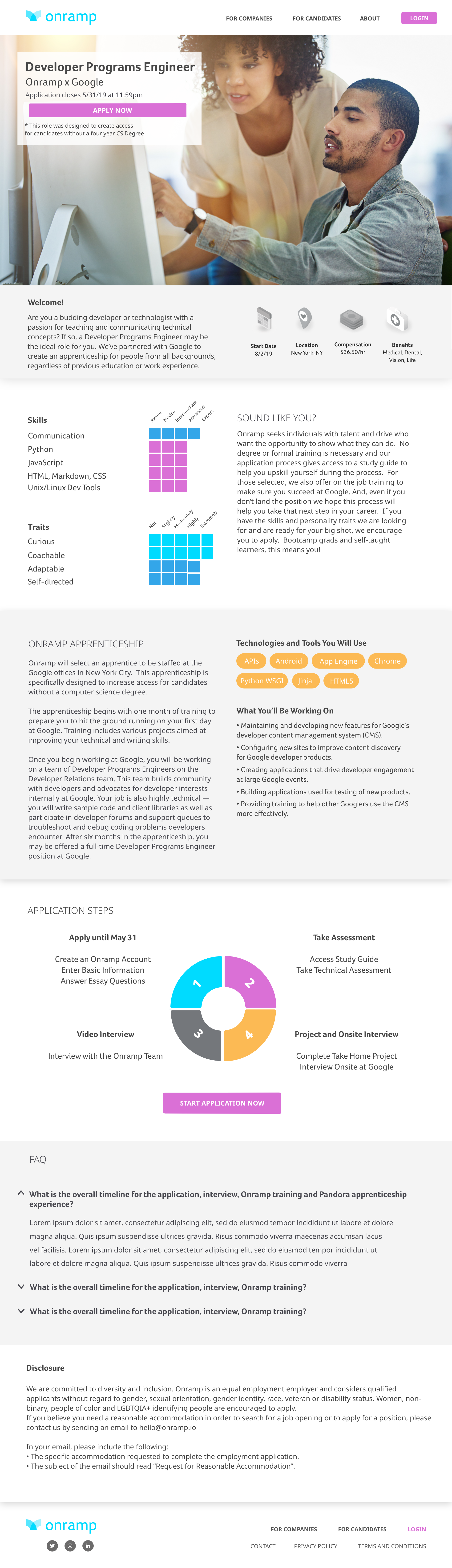
Design job pages that reduce applicant intimidation
Instead of dense requirement lists, roles were presented with:
Clear skill expectations
Visual hierarchy
Encouraging microcopy
Emphasis on growth potential
Why it mattered:
Reduced cognitive load & ambiguity and improved user confidence.
4

✨ Outcomes - Post Launch
★ Platform grew from 300 → 50K+ users
★ Application completion and applicant diversity increased
★ Application experience rated 4.9/5 for clarity and usability
★ Improved internal ability to evaluate candidate skills
★ Modular application steps revealed real time drop off points
💡What I Learned
Designing for inclusion requires more than visual polish, it requires restructuring systems that subtly disadvantage users.
This project strengthened my ability to:
Balance business goals with equity driven design
Translate behavioral insights into product decisions
Design scalable systems across platforms