Case Study:
A Career Portal for Non-Traditional Talent
Project Summary
Design a new experience for non-traditional job seekers to browse, apply, and track their job applications.
Role: UX Designer
Duration: 1 Month
Team: Independent
Context
This project is a digital experience proposal for Onramp, a startup connecting tech talent with apprenticeships at top companies. This web application will replace a static 3rd party application page.
The experience must account for Onramp's goals of inclusion and empowering non-traditional technical learners.
🔎 Exploring the Problem
For most, applying for a job is tedious and frustrating, and this is especially true if you come from an educational background without a degree. Exploring this insight was key to understanding the context of the project.
Onramp identified designing with inclusion and empowering non-traditional learners as a goal. However, most job boards and applicant tracking systems (ATS) were developed with the employer’s hiring needs first, not the applicant’s experience. The underlying problem is that most job applications do not prioritize non-traditional talent due to their differing business needs, which is a fair position. Let’s analyze this problem further.
📈 Business Goals
To better understand Onramp’s unique business goals I spent time connecting directly with the founders and researching the company’s business strategy.
Onramp’s mission centers around inclusion, empowerment, and accessible learning to their self taught community. This purpose was not only a passion for its founders, but was a business strategy which was central to their success. The more job seekers completed applications, the better the talent that could be discovered and delivered to partnering companies.
Emergent Needs
We need the new platform to encourage job-seekers to complete their application by empowering self-taught learners with an inclusive design experience.
We want more applicants to feel comfortable applying, which will allow Onramp to identify top talent, growing both their community and their business.
🤝 User Personas
In order to research the problem further, I spent time gathering direct user stories and feedback from our Customer Success department. With this data I developed 3 user personas that allowed me to understand and challenge assumptions about typical Onramp user archetypes.

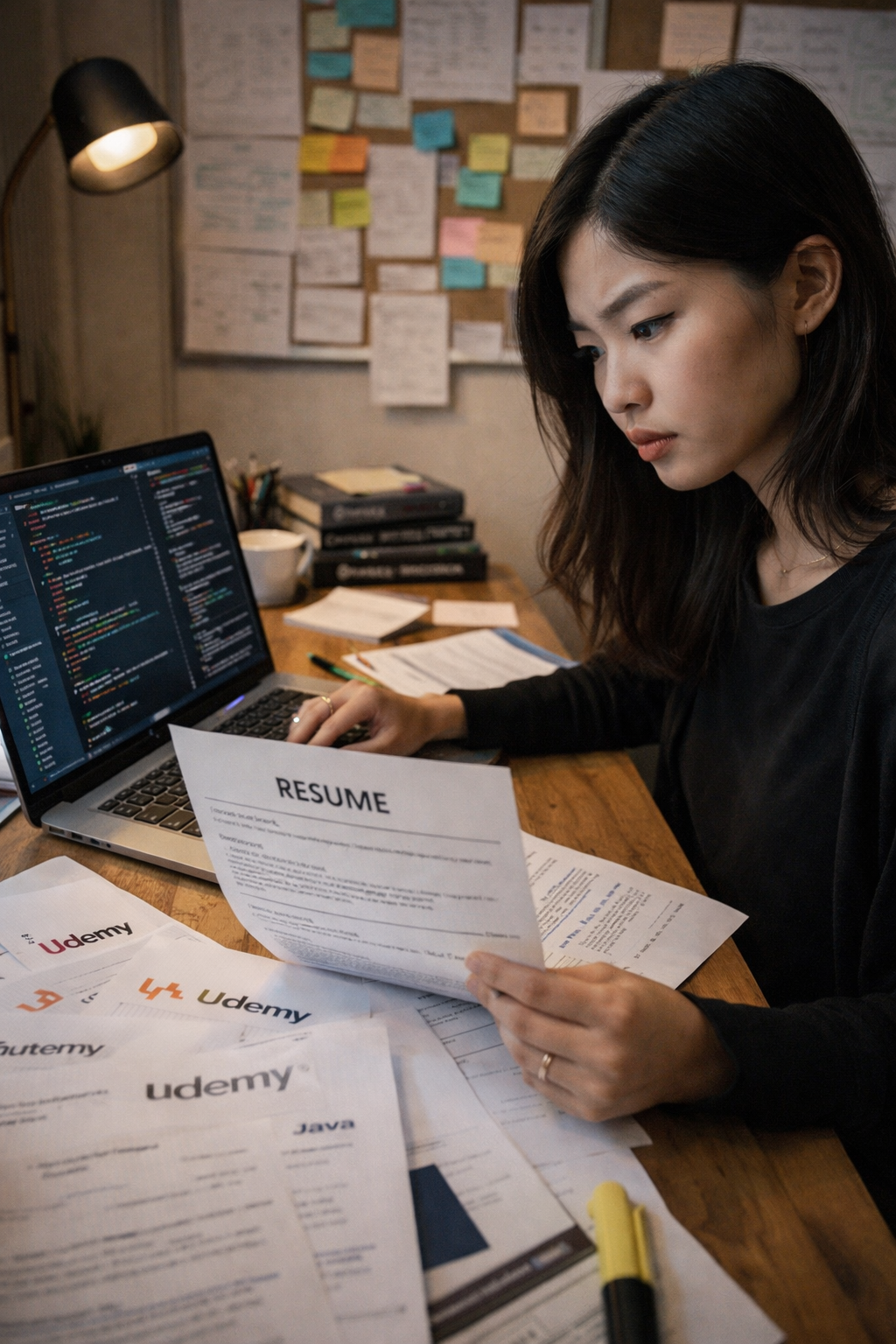
Aaliyah Williams
Age: 28
Gender: Female
Ethnicity: African American
Aaliyah actually has a bachelor’s degree in psychology from UCSB. However, after working for a few years as a research assistant, she found herself to get more interested in coding than psych. She has read “Cracking the Coding Interview” front to back and has taken 4 different Udemy courses, teaching herself C, Python, Ruby on Rails, and Java. Though she has impressive coding skills and many personal projects, she struggles to update her resume with relevant experience, so landing tech interviews is rare.
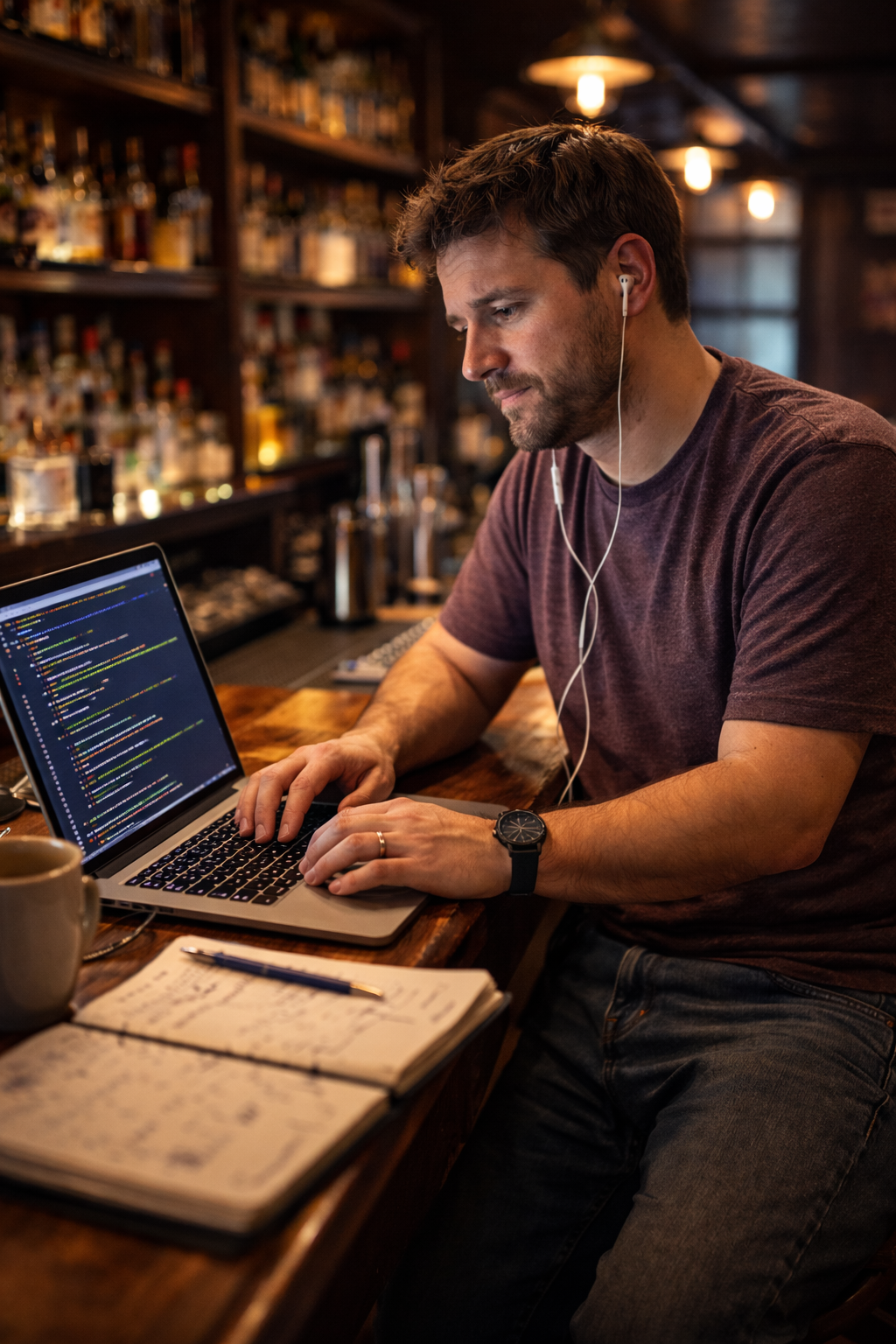
Josh Jones
Age: 32
Gender: Male
Ethnicity: Caucasian
Josh has worked as a bartender for 10 years. Bartending makes good money, but as he approaches his mid 30s he finds himself wanting a more stable career. He has been teaching himself C++ and web development for the past 2 years by watching YouTube videos and practicing on Leetcode. He has applied for jobs but hasn’t heard back from any. He thinks the recruiters may be filtering him out because he doesn’t have a degree.
Cindy Park
Age: 26
Gender: Female
Ethnicity: Korean
Cindy works 2 retail jobs to contribute to rent, and is the main caretaker of her parents. She has been looking for a better paying career, so she enrolled in a coding bootcamp and developed an interest in Data Analysis. After completing the bootcamp, she has been applying for positions and even has referrals from connections in the industry. However, Cindy finds it hard to find time to take coding assessments and schedule interviews around her responsibilities at work and home.
📝 User Needs
One of the themes that emerged with non-traditional users was that they needed more flexibility in their application process than traditional job seekers. Some didn’t have the opportunity to interview during the typical 9-5, while others only had an hour here or there to work on an application.
Others expressed frustration with Applicant Tracking Systems filtering them out for their background or not having specific keywords in their resumes. Additionally, applications were often lengthy and repetitive. Although they had strong skills and backgrounds, their applications just weren’t getting viewed like traditional candidates would.
Emergent Needs
We needed a platform that was more flexible to people with less free time and that gave every application an equal opportunity to be reviewed. We wanted a platform that made it not only more accessible to apply, but possible to organize in a way that highlights each candidates’ strengths more than a traditional job application would.
💡 Finding the Solution
While the MVP included a way for users to browse, apply, and keep track of job opportunities, I felt it was necessary to increase expand the scope of the project after reviewing my research findings.
In addition to these features, I also went on to design an internal dashboard for the Onramp team that allowed the team to filter, search, and expand upon users’ profiles in a more in depth way, so that talent wasn’t getting overlooked.

✨ Mission Statement
A digital experience that empowers, enables, and inspires self-taught learners to engage and apply to job opportunities through Onramp’s growing community.
This would be achieved through these goals:
Create a way for job seekers to find relevant opportunities in their skillset
Reimagine the traditional job application process, with an emphasis on accessibility and inclusion
Design an internal dashboard for the Onramp team to filter, search, and deep dive into applicants, allowing for an equal opportunity for each candidate to highlight their strengths
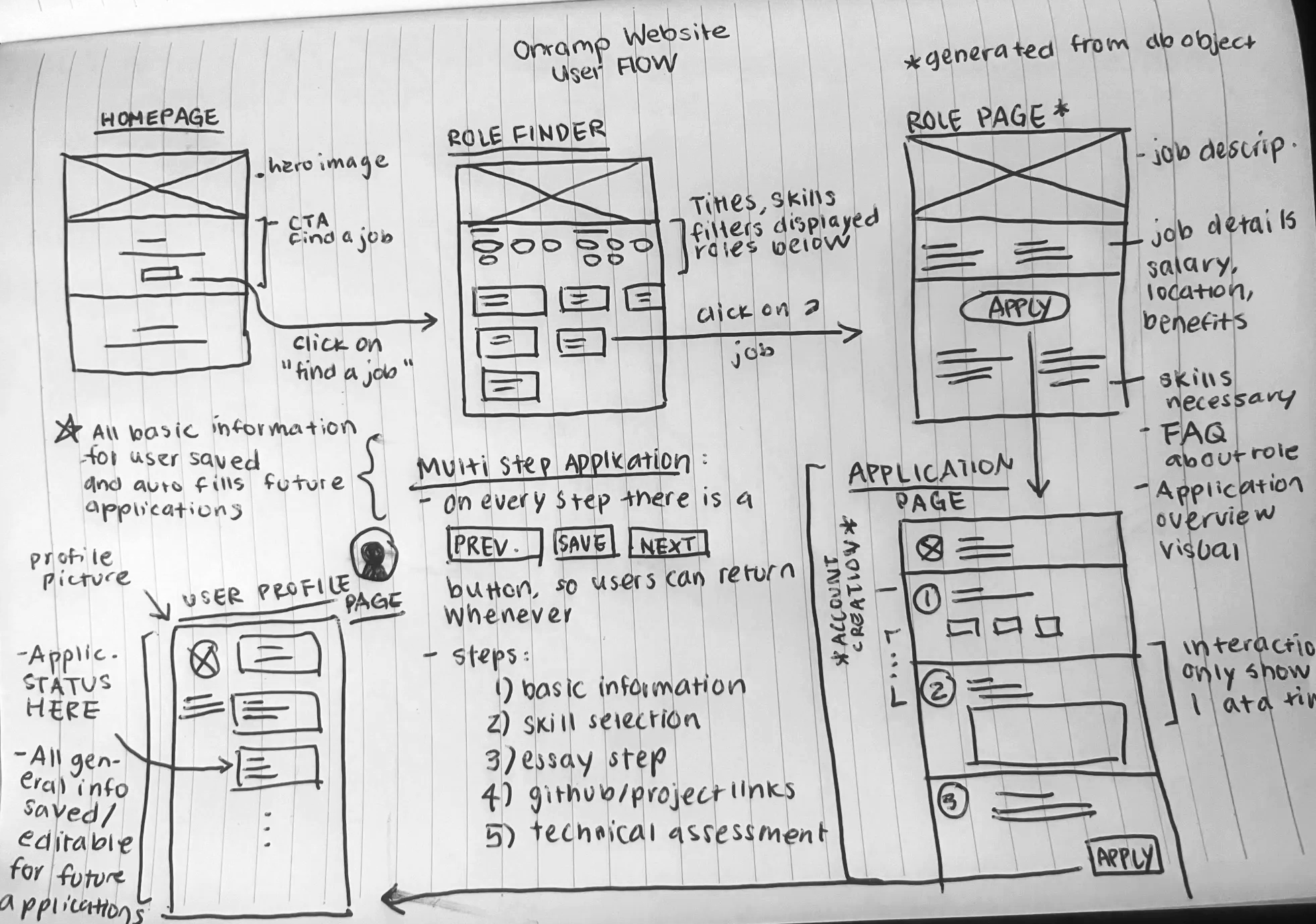
Ideation: Sketches and Wireframes
Through the research phase it became clear what types of interfaces, actions, and content was needed. I found the most helpful way to synthesize the information from the research phase was to sketch a draft which mapped out the general user flow for the experience.